Lai Administration Undermines Public Trust in National Defense Budget
United Daily News Commentary, December 12, 2025
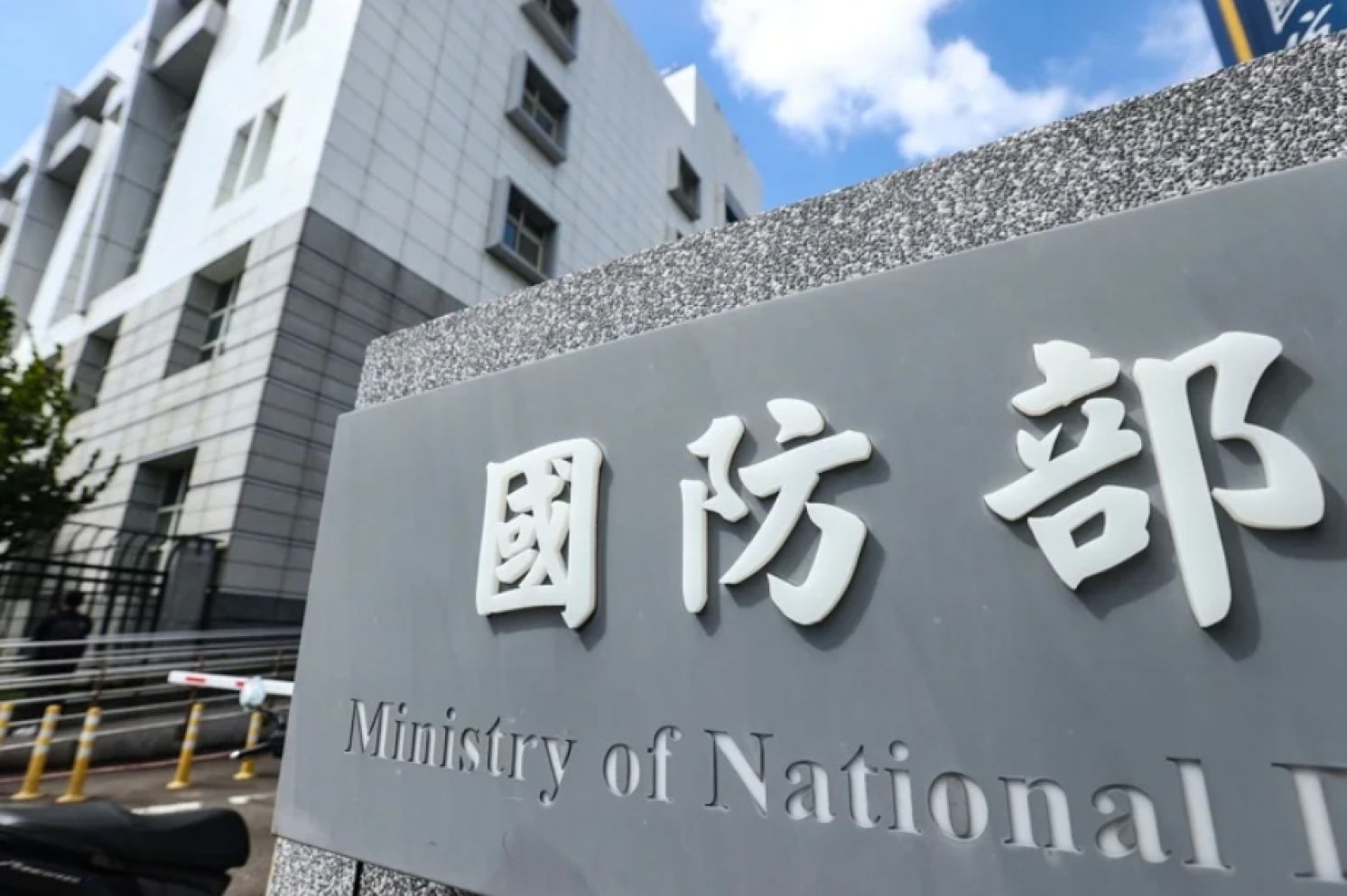
Whether to align with the United States or to strengthen Taiwan’s defense against China, President Lai Ching-te revealed in an interview with foreign media that Taiwan plans to allocate NT$1.25 trillion (about US$39.8 billion) in a special national defense budget. The special bill, however, was blocked for the second time by opposition parties during the Legislative Yuan’s Procedure Committee review on December 9. The next day, Lai urged the opposition to unite against external threats and allow the budget to proceed to committee review. Yet even before the words faded, a small interior renovation company in Tainan not only won a Ministry of National Defense (MND) NT$590 million (about US$18.8 million) tender for RDX explosives, but lawmakers further revealed that it is lined up for an additional nearly NT$900 million (about US$28.6 million) open-ended contract—amounting to roughly NT$1.5 billion (about US$47.8 million) in total business.
The special defense budget has not yet passed, but it is foreseeable that the arms trade will be thriving. Still, this business is not open to everyone. When faced with a tender worth nearly NT$600 million (about US$19.1 million), Minister of National Defense Wellington Koo responded lightly, stating that as long as an agent can obtain an export permit and a certificate of origin from the manufacturer, and the documents are verified as authentic, imports are allowed.
According to Kuomintang (KMT) Legislator Wu Tsung-hsien, the company “Fumai International Interior Renovation” has a capital of only NT$19 million (about US$600,000). Contractors in this case should meet a financial threshold — paid-in capital not less than one-tenth of the tender amount — and should have prior experience in manufacturing or importing explosives. But has this renovation company ever handled munitions? Or has it only handled construction materials?
Minister Koo stated that the company “has the agency capability to bid,” and added that the reason is that there is “no domestic production capacity.” This was immediately refuted by KMT Legislator Ma Wen-chun, who said this was incorrect. RDX used by the military has always been produced by the Armaments Bureau; this time, due to increased ammunition production and insufficient capacity, they are procuring externally for the first time.
Legislator Ma’s core doubts align with public concerns: even if this is the first external procurement, it should still comply with procurement regulations. Yet this renovation company appears to have bypassed nearly all procurement rules. First, no explosives permit; second, no handling capability; third, not a defense-related industry; fourth, capital below one-tenth of the tender amount; fifth, first-time bidder. With these five issues alone, under normal circumstances, the company could never have secured this tender. What qualifications does this interior renovation firm have?
According to local Tainan records, Fumai International undertook multiple park renovation projects for the Tainan City Public Works Bureau from 2013 to 2015, completing 38 projects ranging from a few hundred thousand to just over one million New Taiwan dollars. It seemed to be a small contractor for local government projects at the time—so how did it suddenly develop the “capabilities” to win a NT$590 million (about US$18.8 million) explosives tender from the MND? Lawmakers pointed out that as of August 9 last year, the company's registered business activities only included construction wholesale, building materials retail, appliance wholesale and retail, interior decoration, residential building development and leasing, investment in public infrastructure, real estate trading, real estate leasing, and interior renovation. But on December 30 last year, it abruptly added international trade, hardware wholesale, electronic materials, chemical materials wholesale, and machinery wholesale. The timing has sparked extensive speculation.
This is not the first time a small company has secured a massive government deal. During the pandemic, a company registered in Sanchong District, New Taipei, “Golden Global,” won a NT$1.65 billion (about US$52.5 million) rapid-test procurement contract. The company, with only NT$2 million in capital and previously operating as a food business, managed to import rapid tests, shocking the public. Another example is the 2023 egg shortage triggered by the avian influenza outbreak. Then-Minister of Agriculture Chen Chi-chung initiated a special import subsidy program. A newly established company “Chao-ssu,” registered in Gangshan District, Kaohsiung, with only NT$500,000 (about US$15,900) in capital, somehow had the capacity to import huge quantities of Brazilian eggs. This caused public uproar. Following a two-year investigation, Taipei prosecutors in August indicted the person in charge for fraud, falsifying business documents, and violating anti-money-laundering laws, seeking a two-year sentence. But all involved officials were cleared of wrongdoing. Over 50 million expired eggs were destroyed, with procurement and disposal losses exceeding NT$500 million (about US$15.9 million).
When such unassuming small firms consistently win massive government deals, how many people truly believe there is no powerful backing behind them? If there are irregularities or corruption involved, then failing to uncover the truth not only drains state coffers and wastes taxpayers’ hard-earned money—it threatens the integrity of governance. The Legislative Yuan, responsible for scrutinizing the central government budget, cannot look the other way.